Woodber - Classic Number Game
- 4.9
- Rating
- 10.00M
- Installs
- Free
- Price
 Analysis by App-foxy
Woodber - Classic Number Game is the kind of board puzzle I can open for a few quiet minutes without needing to learn a complicated system first. I place and combine numbers, look for matches, and try to keep the board manageable while the difficulty gradually asks more from my attention. That simple loop is the reason the game feels approachable immediately, but it is also the question that matters after the first week: does the routine stay satisfying once the novelty wears off?
In my experience, the answer depends on what I want from a mobile game. If I enjoy calm logic challenges, short sessions, and the pleasure of spotting a solution that was not obvious a moment earlier, this has lasting appeal. If I need a deep story, competitive multiplayer, or a constantly changing set of mechanics, I would move on quickly. Woodber is a focused board game for number-puzzle fans, not an all-purpose entertainment package.
Why the first week feels so inviting
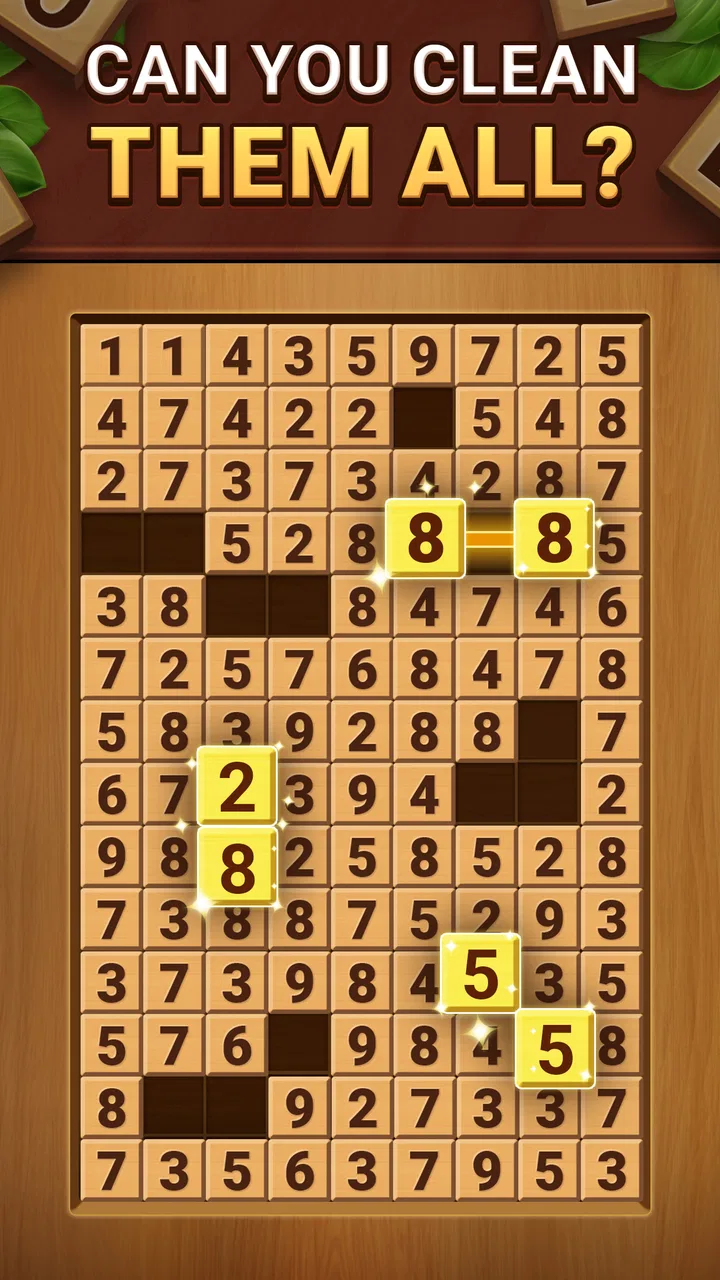
The opening appeal comes from its low barrier to entry. The central idea is easy to understand: examine the numbers on the wooden-style board, find useful matches, and make choices that keep future moves possible. I do not have to spend a long tutorial period learning characters, menus, or elaborate rules. The game gets to the mental task quickly, which makes it a natural choice when I have a short break between errands or want something quiet before bed.
You May Also Like

 Blood Strike: 2.5 Anniversary
Blood Strike’s Loadouts Turn Every Drop Into a Tactical Gamble
A close look at Blood Strike’s custom loadouts: how fast access to signature weapons reshapes its battle royale rhythm, rewards preparation, and narrows the gap between fights.

 Pandora - Music & Podcasts
Pandora’s Music Is Easy to Start, but Harder to Recover
Pandora’s strength is its low-effort path from a seed to a station. Its weak spot is how much confidence it asks you to place in connection, setup, and quiet recovery.

 8 Ball Pool
 Is Built on Rivalries, Rematches, and Routine
A close look at the rivalries, rematches, shared routines, and unanswered safety questions that turn a quick pool match into a persistent mobile community.

 Samsung Music
’s Quiet Strength Is Playing What You Already Own
Its reach comes less from spectacle than from dependable access to a personal library. That simplicity is both the app’s strongest retention engine and its ceiling.

 AccuWeather: Weather Radar
AccuWeather Review: A Quick, Clear Forecast for Everyday Decisions
For everyday plans, the best forecast is the one you can understand quickly. AccuWeather makes rain timing, radar, and local conditions easy to act on, with a few trade-offs.

 Hill Climb Racing
Why Hill Climb Racing Still Turns Crashes Into One More Run
A tiny car, a bumpy hill and one more upgrade: Hill Climb Racing keeps resurfacing because its simple chaos makes every near-miss feel personal.
More From Our News Desk
View All News


The combination of number matching and cross-math thinking gives the game more texture than a basic matching board. A move can look attractive because it works immediately, yet still be poor if it leaves an awkward arrangement behind. That small layer of planning is where the experience becomes engaging. I am not merely clearing whatever pair is closest; I am trying to read the board and protect the next few options.
That design also makes the first sessions feel pleasantly personal. When I solve a crowded position, the satisfaction comes from recognizing a pattern rather than from a flashy reward. The wooden presentation supports that mood. It gives the game a gentle, tactile identity, even though I am playing on a phone or tablet. I found it easier to settle into than visually aggressive puzzle games that constantly interrupt the board with effects and demands for attention.
The game is free to download, and its Everyone age rating makes it suitable for a broad audience. That does not mean every child will enjoy the number focus, but it does make Woodber a reasonable choice for family devices or for someone looking for a puzzle without mature themes. The developer is LIHUHU PTE. LTD., and the current version is 2.9.10 on devices using Android 7.0 or later. Those details matter if I am installing it on an older Android phone rather than a recent model.
Its reception suggests that many players find the basic formula approachable: the game has a 4.9 average from around 356 thousand ratings and has passed 10 million installs. I do not treat popularity as proof that a puzzle will suit me, but those figures do indicate that the straightforward format has reached a wide audience. The important point is that the appeal is easy to understand within a few minutes, rather than hidden behind a complicated progression system.
A useful routine for short breaks
One realistic use case is a waiting-room session. I can start a board while waiting for an appointment, play until my name is called, and stop without feeling that I have abandoned a long story or let a team down. The same works during a commute if I am seated, during a coffee break, or when I want to replace a few minutes of aimless scrolling with something that exercises concentration.
I recommend beginning with a deliberate scan instead of grabbing the first available match. Look across the entire board, note numbers that appear to have several possible partners, and consider whether a move opens or blocks useful space. This habit makes the game feel less random and gives me a better chance of understanding why a position succeeded or failed. It is one of the first signs that Woodber can become a thinking routine rather than a disposable time-killer.
Another practical tip is to avoid treating every immediate match as equally valuable. A move that clears a convenient pair may remove a number needed for a more flexible combination later. I try to ask two questions before committing: does this solve a current problem, and what does it leave me with? That second question is where the cross-math element becomes more meaningful. It also helps prevent the common frustration of reaching a board that looks almost solved but has no comfortable continuation.
What remains valuable from month to month
The long-term strength is repetition with a small mental reset. I can return after a day away and understand the objective instantly, but I still need to pay attention to the particular arrangement in front of me. That balance is useful: there is no heavy relearning cost, yet the board is not entirely automatic. For me, this makes the game better suited to a regular habit than to one long marathon session.
Woodber works especially well as a transition activity. I can use it after work to shift away from notifications, or play a short round before starting a more demanding task. Because the game centers on visual scanning and numerical relationships, it asks for enough concentration to occupy my mind without requiring the emotional investment of a competitive game. This is a genuine recurring benefit, provided I enjoy the underlying puzzle loop.
The free entry point also supports experimentation. I can install it, play enough to judge the matching and cross-math rhythm, and decide whether it deserves a place in my routine before spending anything. In-app purchases range from $1.99 to $9.99 per item. I would treat those purchases as optional convenience or support rather than part of the reason to try the game. The core decision is whether the board itself remains enjoyable, because no purchase can fix a puzzle style that does not suit me.
There is a useful distinction between lasting value and endless variety. Woodber can remain relevant because I like practicing the same kind of reasoning, not because it constantly reinvents itself. That makes it comparable to a daily crossword, a classic solitaire app, or a familiar Sudoku routine. Those alternatives may be better if I want more established rule sets or a broader range of puzzle formats. Woodber is the better fit when I specifically enjoy matching numbers while managing a changing board.
I would also recommend it to players who like gradual improvement but do not want a formal training program. After several sessions, I notice patterns more quickly and become less impulsive about early moves. The improvement is subtle and comes from observation. I do not need to track a personal performance system to feel that I am getting better at reading the board, although players who depend on detailed statistics may find that kind of progress less visible.
How to keep the habit from becoming automatic
My best long-term approach is to vary the purpose of each session. Sometimes I play for speed, sometimes I focus on preserving options, and sometimes I simply try to make the cleanest sequence I can find. This prevents the game from becoming a mechanical search for the nearest match. It also reveals a trade-off: playing quickly is convenient, but slowing down usually exposes more of the strategic character.
I would not make it the only puzzle game on my phone. Alternating it with word puzzles, logic grids, or a more traditional card game keeps the mental routine fresh. Woodber has a narrow identity, and that is both its strength and its limitation. A focused game is easy to return to, but repeated exposure to one type of decision can eventually feel predictable.
For a family setting, I can imagine taking turns explaining why a particular match is useful. That makes the game more social even though its basic activity is individual. It is also a good way to help a younger player understand that the best move is not always the most obvious one. Still, anyone seeking direct head-to-head play should choose a different board title designed around multiplayer interaction.
The maintenance burden is low, but not invisible
From a practical standpoint, Woodber is easy to maintain. The installation requirement of Android 7.0 or later covers many older devices, and the game does not ask me to maintain a large world, manage a collection of characters, or return at fixed times to protect progress. I can leave it alone and come back when I feel like playing. That is a major advantage over games built around daily obligations.
The real maintenance burden is mental rather than technical: I have to decide whether the routine still feels rewarding. A simple puzzle can stay on a device for months while receiving little attention, especially if I keep expecting the next session to feel different from the last. I avoid that trap by using it intentionally, such as for a short concentration break, instead of opening it automatically whenever I am bored.
There is also the question of purchase pressure. Since the game is free with in-app purchases, I would pay attention to how optional items fit into my own use. A free game is not automatically inexpensive if I feel pushed toward repeated spending, so I prefer to test the basic experience first. For someone who wants a completely purchase-free environment, a paid puzzle app with one upfront cost may be more comfortable, even if it offers less immediate accessibility.
The game’s broad age rating is helpful for shared devices, but parents should still decide whether number-focused screen time fits their household. “Everyone” describes the content suitability, not whether the game will be educational, relaxing, or appropriate for every child’s attention span. I would introduce it as a casual logic activity rather than promise a formal learning benefit.
Where fatigue begins
The biggest source of fatigue is repetition. The central pleasure comes from seeing relationships among numbers and making a good clearing decision. Once I have played many sessions in a row, that same pleasure can flatten into routine. The game is not at fault for having a clear identity, but players who need frequent new mechanics may feel that the experience has stopped developing.
Another limitation is that a calm presentation can become too quiet for players who want strong excitement. There is no reason to expect the same adrenaline as an action game or the social tension of a competitive board title. I see this as a deliberate trade-off, but it means Woodber is not the right choice when I want a dramatic challenge, a story to follow, or a reason to celebrate a victory with other players.
Number matching can also produce a particular kind of frustration: a board may look close to completion while offering fewer useful choices than expected. When that happens, I sometimes feel that I am correcting an earlier mistake rather than solving a fresh problem. The best response is to slow down and review the opening decisions, but players who dislike being punished by planning errors may prefer a more forgiving match-three game.
People who struggle with small on-screen elements should consider the device they use. A larger tablet can make scanning and comparing numbers more comfortable than a compact phone, especially during longer sessions. I would not choose Woodber for a situation where I am already tired or distracted, because the game’s enjoyment depends on seeing the board clearly and remembering which options I am preserving.
It is also less suitable for anyone looking for a strong sense of completion. A story game can provide a final chapter, while a competitive title can offer rankings or changing opponents. Woodber’s value is cyclical: I solve, reset my attention, and return later. That is excellent for a repeatable habit, but less satisfying if I want a clear endpoint.
My long-term verdict
After the initial novelty fades, Woodber earns space on my device when I use it as a compact thinking ritual rather than expecting it to become my main game. The rules are accessible, the number relationships reward patience, and the board format fits short sessions unusually well. I especially like that I can return after a break without reconstructing a complicated plot or remembering a large set of controls.
I would recommend it to adults who enjoy quiet logic games, families wanting an approachable number challenge, and players who prefer a repeatable routine over constant spectacle. It is also a sensible choice for someone with an older Android device, as long as that device runs Android 7.0 or later. The free price makes trying it straightforward, while the optional purchase range means I can decide later whether the experience is worth spending on.
I would skip it if I need multiplayer competition, rich narrative progression, a wide collection of puzzle types, or a steady stream of major changes. I would also look elsewhere if repeated number matching quickly feels like work. A traditional Sudoku app may be better for strict deduction, a card game may offer more familiar relaxation, and a match-three title may provide more immediate visual energy. Woodber occupies the middle ground: more thoughtful than a purely reflexive matching game, but less expansive than a full strategy or adventure title.
My practical recommendation is to give it several short sessions rather than one long test. In the first session, learn the basic rhythm. In the next few, deliberately scan for future options and notice whether that planning adds enjoyment. If I still look forward to the next board after the first week, the game has probably found a useful role. If I am opening it only from habit and making moves without thinking, that is a clear sign to rotate it out.
Ultimately, Woodber - Classic Number Game succeeds because it understands the value of a small, repeatable challenge. It does not need to dominate my attention to be worthwhile. Its lasting quality comes from being ready when I want a focused break, while its main weakness is that the same focused formula can eventually feel narrow. For me, that is a fair trade: it earns a permanent place as an occasional number-puzzle companion, not as the only game I keep returning to.
FAQs for Woodber - Classic Number Game
01What is Woodber - Classic Number Game about?
Woodber - Classic Number Game is a puzzle game that challenges players to arrange numbers in a specific order. It combines classic number puzzles with modern twists, offering engaging gameplay for players who enjoy logical challenges. The game features various difficulty levels and modes to cater to different skill levels.
02Is Woodber - Classic Number Game free to play?
Yes, Woodber - Classic Number Game is free to download and play. However, it may contain in-app purchases for additional features, such as extra hints or ad-free gameplay. These purchases are optional and designed to enhance the gaming experience without hindering free play.
03What platforms is Woodber - Classic Number Game available on?
Woodber - Classic Number Game is available on both Android and iOS platforms. Users can download it from the Google Play Store or the Apple App Store, ensuring accessibility for a wide range of smartphone users looking to enjoy number-based puzzles.
04Does Woodber - Classic Number Game require an internet connection?
No, Woodber - Classic Number Game does not require a constant internet connection to play. This makes it perfect for users who wish to enjoy the game offline, whether during travel or in areas with limited connectivity. However, some features like leaderboards may require internet access.
05Are there ads in Woodber - Classic Number Game?
Yes, Woodber - Classic Number Game includes advertisements, as is common with many free-to-play games. These ads help support the developers. Players can choose to disable ads through in-app purchases if they prefer an uninterrupted gaming experience.
Pros
- Simple and intuitive interface.
- Engaging gameplay mechanics.
- No internet required to play.
- Regular updates and improvements.
- Supports multiple languages.
Cons
- Contains in-app ads.
- Limited customization options.
- Occasional performance lags.
- Requires frequent updates.
- No multiplayer mode available.

Woodber - Classic Number Game
Gallery